Energy is the number one environmental problem today. But we don't want to minimize our use of energy --- abundant energy makes possible civilization, especially our kind of high-technology civilization. So the question is: how can we maintain abundant sources of energy without ruining our environment? Here is some information that can help. This post is under … [Read more...]
Archives for March 2007
A 1990s Forecast of a Possible Effect of Global Warming on an Endangered Species
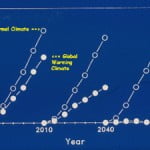
The underlying reason that we are having trouble dealing with global warming is that we are not used to dealing with environmental change. This is true both in the history of beliefs and ideas in Western Civilization and in modern environmental sciences, which are formulated primarily in terms of steady-state conditions and theory. In Western Civilization the idea is known as … [Read more...]
Mining Roads and First Nation Cultures
The government of British Columbia, Canada, approved a request by the Redfern Corporation to build a 100 mile long mining road through the traditional land of the Taku River Tlingit First Nation. But they approved this road without asking the permission of hte First Nation. If I understand things correctly, they didn't even ask the First Nation. And The land lies in northern … [Read more...]
The Deer Hunt in Connecticut
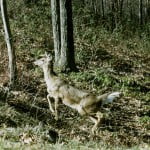
Late in 2003, Friends of Animals and The Audubon Society were at odds over deer. Too many deer is a national problem---- what to do about them? Who can be against an individual deer, a bambi, grazing in a pasture, looking up with big eyes? And who can be against the conservation of an entire endangered species of a bird? Could it be that the Audubon Society does not like bambi? … [Read more...]
Energy and Civilization
Now that it is generally accepted that global warming is happening and is at least in part the result of burning fossil fuels, the question is: what do we do about it? One answer is energy sacrifice — that we try to use as little energy as possible, each of us, everywhere, forever. In my view, that’s unrealistic — consider how unsuccessful we are at depriving ourselves, even … [Read more...]
What is it like to be in a radiation-polluted land?
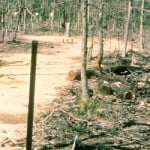
A Walk Through an Irradiated Forest With growing recent advocacy for more nuclear power plants, I have been thinking about a little-known, unique and curious experiment conducted in the 1960s and 1970s at Brookhaven National Laboratory, Long Island, NY: the laboratory radiated an entire forest. Back in those cold-war days the danger of a nuclear war and of other releases of … [Read more...]
On Being Just the Right Size
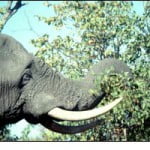
Is it just chance that people are about two meters tall, or is it a result of laws of nature?Life comes in many sizes. The smallest creatures are bacteria. The smallest of these are about one millionth of a meter long and half that wide, and weigh less than a billionth of a billionth of a kilogram. The longest and widest creature is a surprise -- not an elephant, not a … [Read more...]
360 Degrees: Restoring Nature in a Naturally Changing World
Restoration of nature and sustainability of natural resources have become popular terms these days. They sound straightforward enough, but they come with their own loaded meanings. If you restore a painting, you make it look exactly as it did when it was first painted – you put it back into its original state. So it is with restoring houses, gardens, antique cars. Restoration … [Read more...]